

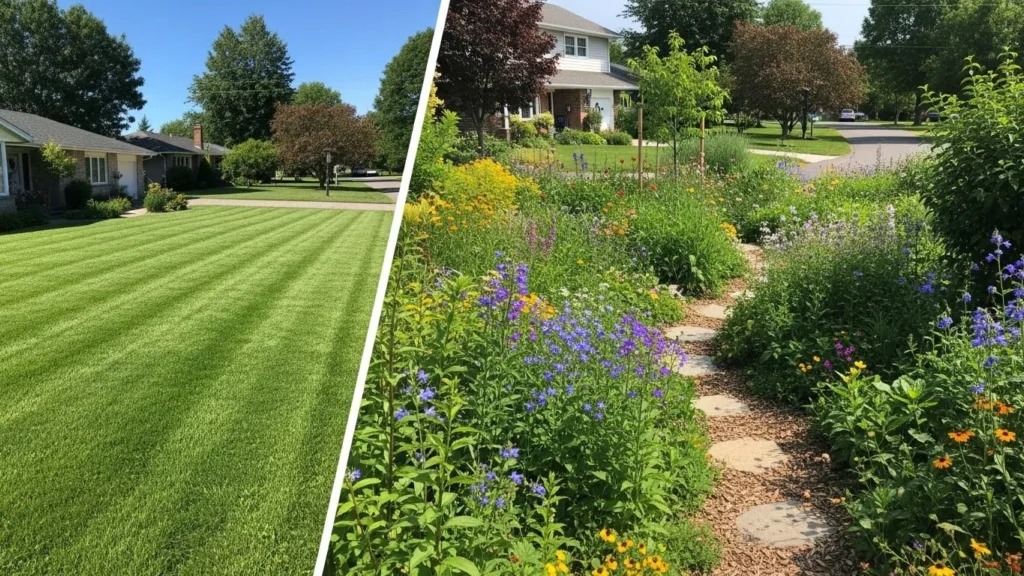
When someone thinks of a lawn, they often envision a front yard with neatly trimmed green grass. This is the standard lawn for most suburban homes in California, either required by HOA (Homeowners Association) practices or just expected because it looks nice and neat.
However, these traditional lawns produce many complications. They require a ton of water to maintain and look healthy, causing an excessive use of water in a drought-afflicted state. They also heavily ruin the biodiversity of the ecosystem in which the homeowner lives, damaging food cycles and reducing insects and pollinators.
A better alternative to these traditional lawns is incorporating native drought-resistant plants into front lawns. They would grow more efficiently as they require much less water to maintain and are already adapted to California’s weather conditions. Moreover, when decorated tastefully, these plants could look more gorgeous than a simple grass lawn.
“There are a lot of benefits to doing drought-tolerant, native landscaping. It provides a habitat for wildlife, like butterflies and hummingbirds,” Alek Bartrosouf, creator of the Glendale Community Gardens, said. It provides a micro ecosystem that’s a little bit more diverse than a traditional lawn,” Bartrosouf added.
Biodiversity is an extremely important feature to have in a front lawn. It allows for wildlife and pollinators to flourish, leading to homeowners having to use fewer chemical-based products on a lawn. This allows for healthier soil and cheaper costs. When biodiversity vanishes, insects die, and ruin the ecosystem balance.
How can someone change a lawn? According to a Cambridge study, mowing a lawn either every six or 12 weeks, can increase the number of pollinators visiting flowers on lawns by over 170%. Allowing native plants and grass to continue growing can improve a lawn in terms of biodiversity and environmental sustainability.
Completely getting rid of the grass can also be a good idea. There is a program called Cash for Grass for eligible Los Angeles County residents to get rid of square feet of grass for money. This allows residents to not only get rid of grass, but also have funds to replace it with native and drought-tolerant plants.
The next time a trip to the store requires a payment for a lawnmower and a commitment to pesticides in order to maintain a front lawn, try planting a native plant seed, fixing up a garden in a front yard, or letting the front lawn grow out instead, allowing wildflowers and native plants to take over. This approach immeasurably helps the environment and can even make a lawn stand out from the rest.