

In a world of social media where it’s easier than ever to hold celebrities accountable for their actions, it can sometimes feel hard to find a good piece of art that was also created by a good person who hasn’t been revealed to have committed actions considered problematic or harmful. The advice to separate the art from the artist has been around for ages, but now the question of whether or not it’s actually possible and ethical to do so has become increasingly prevalent.
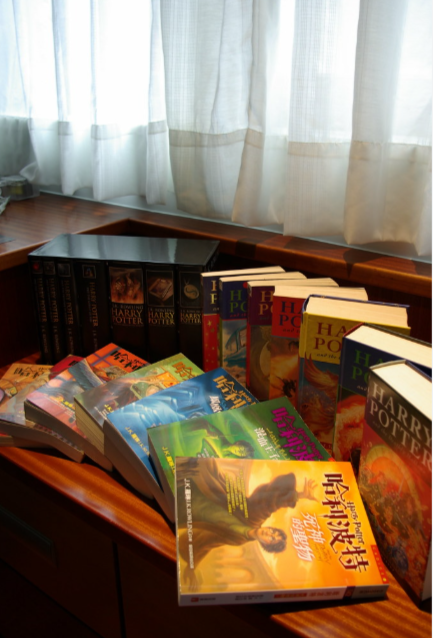
It’s no wonder why people might take solace in this advice, especially if the material that the celebrity is known for is beloved to the person. This is especially so if the artist in question has been revered since childhood. J.K. Rowling, author of the Harry Potter series, has long been lauded as an inspiration, providing escape and magical whimsy for a whole generation. However, in recent years, her pristine reputation has shifted to one of infamy, considering her habits on X (Twitter) on which she has attacked the transgender community.
When an author writes a story, it’s usually for a particular reason; they want to write about things that they deem important. In this way, the writer’s values are inscribed into the pages, whether intentional or not. While the Harry Potter series isn’t perfect by any means, it is generally an innocent, nostalgic children’s book series. No matter how famous Rowling is, she is still a person, a complex person with flaws and the capability to do both good and bad things, with conflicting views and opinions.
It’s common for celebrities, especially children’s celebrities, to be idolized and treated as if they could do no wrong. “We obsessively decode Taylor Swift’s lyrics for relationship references, analyze every frame of a director’s work for their signature style, and track artists’ political evolution through their creative choices,”said NYU Abu Dhabi student Divya Aswani of The Gazelle. “Yet somehow, when confronted with serious misconduct, we suddenly pretend this deep connection between creator and creation does not exist.” By separating Rowling from her art, the implication is that her books exist in a world outside of her actions and wrongdoings, which simply isn’t true.
Johnny Depp is another beloved artist who gained fame over the years for his gothic, awkward aesthetic, notably for his portrayal of Jack Sparrow in Pirates of the Caribbean and Willy Wonka in Charlie and the Chocolate Factory. In 2022, he was involved in a court case where he testified against his ex-wife Amber Heard, during which he was accused of domestic abuse.
Unlike Rowling, Depp is an actor, so his values as a person are generally obscured during his performances. This is similar to how Harry Potter doesn’t include transphobic rhetoric. Depp’s movies such as Charlie and the Chocolate Factory don’t reflect his actions behind the scenes. However, it could also be argued that the way in which he portrays certain characters still reflect himself, and hints to his true self are evident in his films in that way.
It might not be necessary to completely forsake the art created by artists whose work comes into question because of actions in their personal lives. Buying secondhand Harry Potter books or secondhand Charlie and the Chocolate Factory DVDs means that Rowling or Depp don’t get paid, so fans of the art can still consume their content without directly supporting their creators. Furthermore, children’s content like this is designed to teach positive morals, so the consumption of this art can still have benefits. What is dangerous, though, is to ignore the creator’s actions completely and disregard the harm they’ve caused to real people.
“When you try to separate works of art from history, whether that’s the moment of creation or the moment of reception, you’re impoverishing the artwork itself to say that they don’t have a relation,” Yale English professor Amy Hungerford said. As long as people who decide to consume content from the likes of Rowling or Depp do so while acknowledging the artist’s wrongdoings. then they can still engage with their art in a meaningful way.