

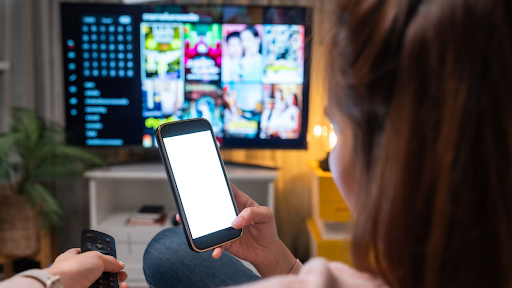
Since its conception, TV has been a method of escape and entertainment for viewers all over the world. It is a means to become immersed in wild and engaging stories, or simply to relax after a long day. Good TV and film generally requires the audience to pay attention to the story in order to properly understand and appreciate it. The rise of social media, however, and the subsequent rise of phone addiction, has changed the way people watch TV, with many people engaging in “second-screen” viewing, which means half-watching TV while scrolling on their phones. Screenwriters have caught on to this habit and have begun catering to viewers who aren’t paying attention. The result is that shows on TV written with second-screen viewers in mind have lower quality writing that is overly direct and repetitive and focused on visual appeal rather than telling a compelling story..
Perhaps the most popular example of this second-screen writing would be Stranger Things, specifically its final season. One of the most prominent critiques of viewers on social media was that there were too many scenes of people just explaining things. The characters had each new piece of information explained to them, and a good portion of the scenes were dedicated solely to exposition. Although this season was visually appealing and engaging, with incredible set design and realistic monsters, audiences were still left disappointed.
Instead of having a shorter or off-screen explanation, the characters simply rehash information, making the dialogue repetitive.“Dialogue in Stranger Things 5 exists primarily to be expository and/or to deliver cheeky one-liners; it lacks character depth and growth,” William Stevenson from Southwestern University said. This has a double effect. It is explaining information to the character, but also reminding the audience what is going on, many of whom are only half-paying attention.
In addition to over-repetitive dialogue, this also breaks one of the basic rules of storytelling: the idea of “show, not tell.” It’s the idea that you leave clues to what is going on in a story, allowing the audience to draw their own meanings for themselves. By explaining every little thing out loud, the writing leaves nothing for interpretation, and the result is a story that lacks depth and doesn’t treat the audience as intelligent.
Another victim of the second-screen viewing trend would be Something Very Bad is Going to Happen, from the same creators as Stranger Things. The horror sequences themselves are very exciting and attention-grabbing. However, the visually appealing quality rings hollow, since the writing itself doesn’t meet these expectations. If the audience is only half-paying attention, it’s easier for them to follow a show with lots of crazy visuals and little dialogue. The issue with this is that many of these visuals that grab your attention lead to loose ends that don’t go anywhere plot-wise. Additionally, the big gory finale justifies itself with a convoluted explanation so that it seems like gore for the sake of gore, as if to grab the audience’s attention just enough to keep them from turning off the TV. The action raises expectations, which can’t help but be lowered when used to distract from the lack of resolution.
The idea of people not fully paying attention to what they’re watching isn’t new; people have been watching TV in the background while doing something else for decades. The issue arises when screenwriters assume that every viewer isn’t paying attention, and use it as an excuse for lazy writing while also feeding into the very real issue of lowered attention spans. “I think people are always hungry for stories made with nuance, care and attention to detail, whether they realise it or not,” journalist Ralph Jones of The Guardian said. “Great storytelling knows how to reward both casual and focused attention.” When TV is focused on capturing your attention to create a good story rather than simply trying to make it easier not to turn it off, that’s when the audience gets really engaged, and programs that unite people and get them talking are created.