

Crime and Punishment, written by Russian author Fyodor Dostoevsky in the year 1867, follows Rodion Romanovich Raskolnikov through mental toils and poverty issues, which lead him to kill a corrupt pawnbroker, Alyona Ivanova, and her sister, Lizaveta Ivanovna.
Alyona was known for taking advantage of the poverty-stricken citizens of St. Petersburg by consistently lowballing them. Raskolnikov sold off many of his sentimental possessions such as the ring his mother got him just to afford another meal or a blanket for the bitter winters. In addition, it was publicly known that Alyona was highly abusive of her younger half-sister, Lizaveta, who remained defenseless and timid.
Raskolnikov believed mankind fell under two categories, ordinary and extraordinary. Ordinary men follow the law and are incapable of changing the world. Extraordinary men, on the other hand, are a select few who — according to Raskolnikov — are able to break and manipulate the law to advance their beliefs. Like influential leaders such as Napoleon, the extraordinary are bound to change the world; Raskolnikov himself thought he was a part of this group, and this belief fueled his crimes.
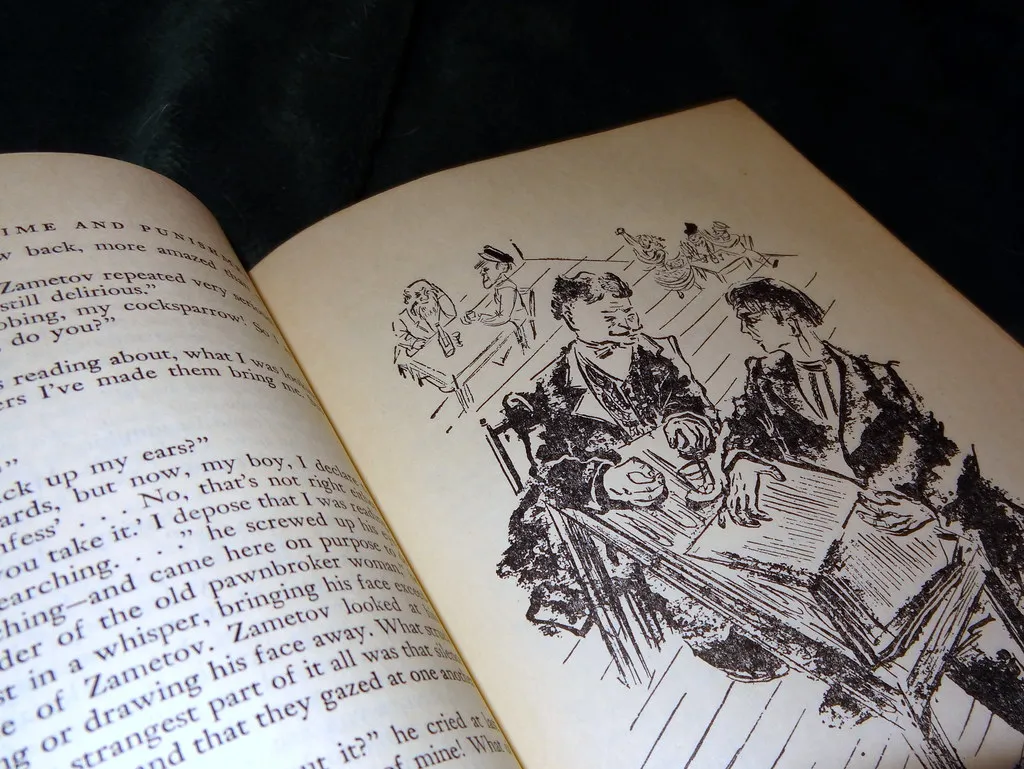
In a conversation between a young student and an officer, Raskolnikov overhears an exchange that validates his darkest thoughts about Alyona. An officer states, “Of course, she doesn’t deserve to be alive…but that’s nature,” but then a student quickly asks “…but tell me: would you yourself kill the old woman, or not?” (Dostoevsky, 69). Sidebar conversations such as these can often normalize radical ideas, and thus after this interaction, Raskolnikov executes his plan in murdering Alyona, taking Lizaveta’s innocent life in the process as well.
Although Raskolnikov’s murders are undoubtedly sinister, it begs the question, can immoral actions be justified if the reasons are moral? This dilemma often frames the utilitarian versus moral absolutism question, which has been debated for centuries and can range from specific issues in animal studies, to lying in order to save a life.
The case of Luigi Mangionie is a hallmark example of this dilemma. Many believe that he was justified in his actions given that Brian Thompson (UnitedHealthcare CEO), was a highly controversial figure, and Mangione was simply trying to enact social change. On the other hand, many others maintain that, despite public opinion, Thompson’s fate should have been left up to the justice system.
That said, Mangione parallels heavily with Raskolnikov. They both do not show any conventional remorse for their actions, and believe what they did was necessary for society. This way of thinking, dubbed as the “extraordinary view,” is very dangerous. People can fall onto the slippery slope of carrying out “justice” for the greater good of the people, often forming a very nihilistic view (rejection of religious and moral dogmas and the belief that life is meaningless) and leading to objectively immoral actions, even if the reasons were moral.
But, what might seem morally correct to society or to an individual, may not be correct in the court of law. While Mangione’s actions are praised online by some, his choices can cause him to spend multiple decades — if not life — behind bars. The novel touches heavily on the topic of consequences. It shows that Raskolnikov’s self-projected view of being “extraordinary” does not work, because the murders send him down a path of self-destruction and extreme guilt. With this, Crime and Punishment emphasizes that oftentimes consequences are not limited to legal punishment, but also psychological and social hardships.
But outside of modern examples, the novel is a poignant reminder on self-justification and moral development. High school students, who are transitioning into adulthood, must learn how to think critically, how to lead, how to vote, and how to organize themselves within society. With this, comes also the imperative need to understand moral limits. Crime and Punishment shows how – despite education and righteous belief – ethical boundaries can still be challenged and violated, and serve as a cautionary tale against it.