


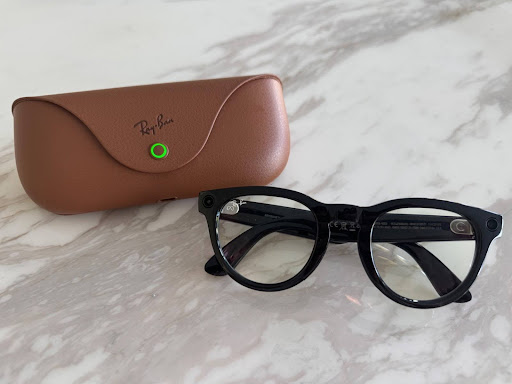
What once seemed like a futuristic idea straight out of an action movie, has now become a reality with the Meta Ray-Ban AI Glasses. These glasses look like regular eyewear but are equipped with a camera, Meta AI, and open-ear audio. Meta and Ray-Ban also offer over 100 different combinations of customizable frames and lenses.
The idea originally started with the Ray-Ban Stories, which were the first smart glasses created by Meta and EssilorLuxottica. They launched in September 2021. EssilorLuxottica is a global eyewear and vision care giant that controls the entire supply chain for lens technology, frame designs for famous brands, and retail stores. The Ray-Ban Stories looked similar to the current product, had the same functions, and met the standards that Meta and EssilorLuxottica were aiming for. Their goal was to create a fashionable, comfortable, and lightweight technology that someone would want to wear regularly.
Over time, the Ray-Ban Stories improved through software updates and added functions like hands-free calling and messaging, a tap to start playing music, and voice controls for music, media, and asking AI questions.
Currently, Ray-Ban and Meta have released Gen 1 and Gen 2 of the Meta Glasses, but what did they improve upon in Gen 2? Originally, the Gen 1 glasses had 1080p+ video resolution at 30 frames per second, battery life up to 4 hours, and an additional 32 hours with charging case. The Gen 2 glasses upgraded to up to 3k video resolution at 30 frames per second, battery life up to 8 hours, and an additional 48 hours with charging case. Although not many factors about the glasses changed, the upgrades with battery life and camera and media quality improved the glasses significantly.
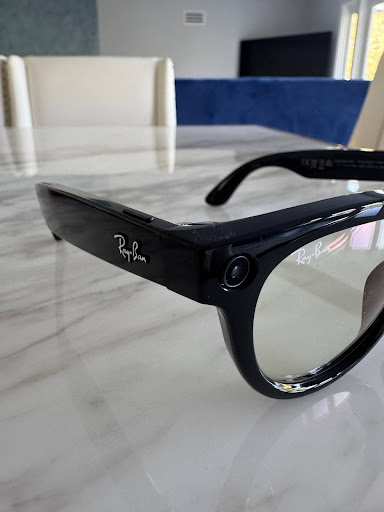
One feature that looks undesirable about these glasses is their thick frame. Inside the frames are necessary electronics like wires, speakers, batteries, and processors. The bulky frame also ensures the glasses are more durable and will not break easily. “I got my glasses around August 2025 and I honestly like the thick frame because it feels more like sunglasses since I have sun lenses,” sophomore Monte Ayvazyan said. With all the technology and wiring, the thick frame remains iconic and recognizable.
All of the specialized materials and high-end electronics such as cameras, speakers, and AI processors are what make these glasses expensive. Gen 1 glasses have become more affordable, at an on sale price of about $284. This allows people who are interested in the product but do not want to spend a lot of money on it, to purchase and try the older version. Gen 2 glasses range from $379 to $500. Both product generations require additional costs for prescription and non-prescription features such as sun, blue light ease, and transition light intelligent lenses.
One revolutionary feature about this product is the significant accessibility features for blind and low-vision users. Through AI assistive technology, scene recognition, and text to speech, users are able to employ hands-free technology to get assistance for daily activities such as reading menus and understanding surroundings. With a simple, “Hey Meta, look and tell me what I’m looking at,” the AI verbally explains everything in the picture with detail through the built-in speakers. The glasses are also able to connect to an application called Be My Eyes, where users receive assistance from a sighted volunteer in real time through live-streaming with the built-in camera. Be My Eyes is a service available day and night with 24-hour support, free and unlimited calls, and world-wide service.
Although these glasses provide many benefits and could change the world for the better, some users take advantage of these features by recording in secret and violating privacy. The glasses have a built-in light that flashes when the camera is in use. The recording stops when the light is covered, but the light is not as noticeable as viewers may think.
On August 13, 2025, content creator Aniessa Navarro shared a story about her experience on the social media platform, Tik Tok, gaining over 8.2 million views as of April 2026. Navarro explained that as she was getting a European wax, she noticed that her esthetician was wearing Meta Glasses and expressed her automatic discomfort during her situation. She mentioned that she confronted her esthetician, who claimed that the Meta Glasses were turned off with no charge. The majority of her comments claimed that the esthetician was lying, with one comment claiming “she did do something wrong” and another “if she can afford prescription Meta Glasses, she can afford one pair of cheap regular prescription glasses for her job.”
Meta Glasses are a useful investment for users who enjoy vlogging their life, as they provide hands-free recording and assistance while doing tasks like driving, holding things, eating, or even just cinematic travel videos. Since this technology is relatively new, released in September 2025, eventually there will be more advanced technology and laws to prevent spying and abusing the features of the camera. Regardless, Meta Ray-Ban AI glasses prove they are a revolutionary change to how technology is evolving. The bottom line: They are worth the investment in the long run, but it’s important to keep privacy issues in mind.