

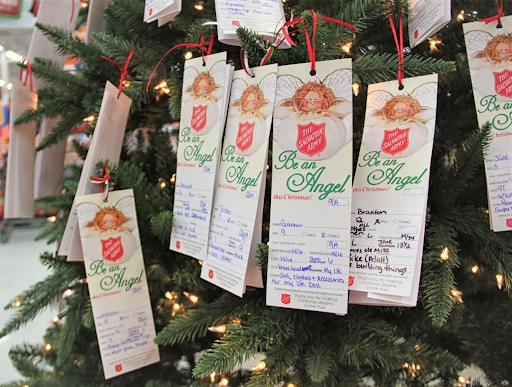
During the holidays at various parts of the year, shoppers get ready to purchase gifts for loved ones, family, friends, and even strangers. Angel Tree, a program set up by the Salvation Army, is a holiday donation program that allows Walmart shoppers to pick a tag off a tree and shop for a less fortunate child, or the elderly.
This program began in 1979, but recent social media presence has spiked its popularity in the last few years. The tags include the child’s name, age, and gender along with a list of needs and wants. Sponsors are required to spend 30 dollars minimum on the tag, but many go above and beyond, some spending hundreds of dollars.
Many donors post videos, showing hauls on what they got their chosen angel; these donation videos range in price but almost always have one thing in common— their generosity— most people not only get the child’s needs, but also spoil them with their wants, like toys, makeup, and bikes, giving these children a chance to feel excitement and a feeling of normalcy during the holidays.
However, the presence of social media has subtly changed the giving culture. The act of donating, which was once private and personal, now has a performative element. What was once originally an intimate act of giving, has now become a show for millions of people to see. This raises a question in intention: Are videos posted for personal validation and praise, or to bring awareness and inspire viewers to donate?
Social media has stretched “performative giving” across multiple forms of charity. Toy drives such as Toys for Tots, back-to-school backpack drives, food pantry donations, and even GoFundMe contributions are often filmed, edited and shared as content. Entire pages exist dedicated to “random acts of kindness” where influencers pay for people’s groceries, hand out gift cards, or tip servers hundreds of dollars, all while the camera rolls. While these gestures remain meaningful, filming them turns the act from private good deeds into a public performance.
The glamorization of charity reflects society’s fascination with validation, making it so that acts of kindness are measured in likes, comments and shares. Social media pressures influencers to outdo previous donations by other donors, leading to a consumer-driven approach to giving. The focus switches to buying bigger hauls, filling out multiple tags, or filming more engaging TikToks. No matter the intentions, the visibility from these videos benefits programs like Angel Tree.
Many influencers have started to make videos of their contributions. The most striking video series posted was by a creator with the username Serenaneel, where she did multiple tags. The most notable one was for a teenage boy who asked for a calico kitten. She contacted the company, bought the boy all his needs and wants, adopted the cat from a shelter, and bought all the needs for the kitten. The videos were extremely successful, with the cat video receiving 38.4 Million views. While these videos are edited in a way that makes donating seem exciting and trendy, and have some questioning the true intention behind the donation, the fact remains that the kids in need end up with gifts they may have not otherwise gotten.
Both inspiring and performative, the giving culture on social media has greatly influenced the vitality of donating during the holiday season. Regardless of people’s personal take on the morality of the trend, with the amount of harmful content present on social media, it’s refreshing to see one that surrounds a beneficial cause. While the objective behind each post may vary from person to person, regardless of motivation, one thing remains true: more children get to receive a little more joy because people chose to give a gift, whether it was filmed or not.